
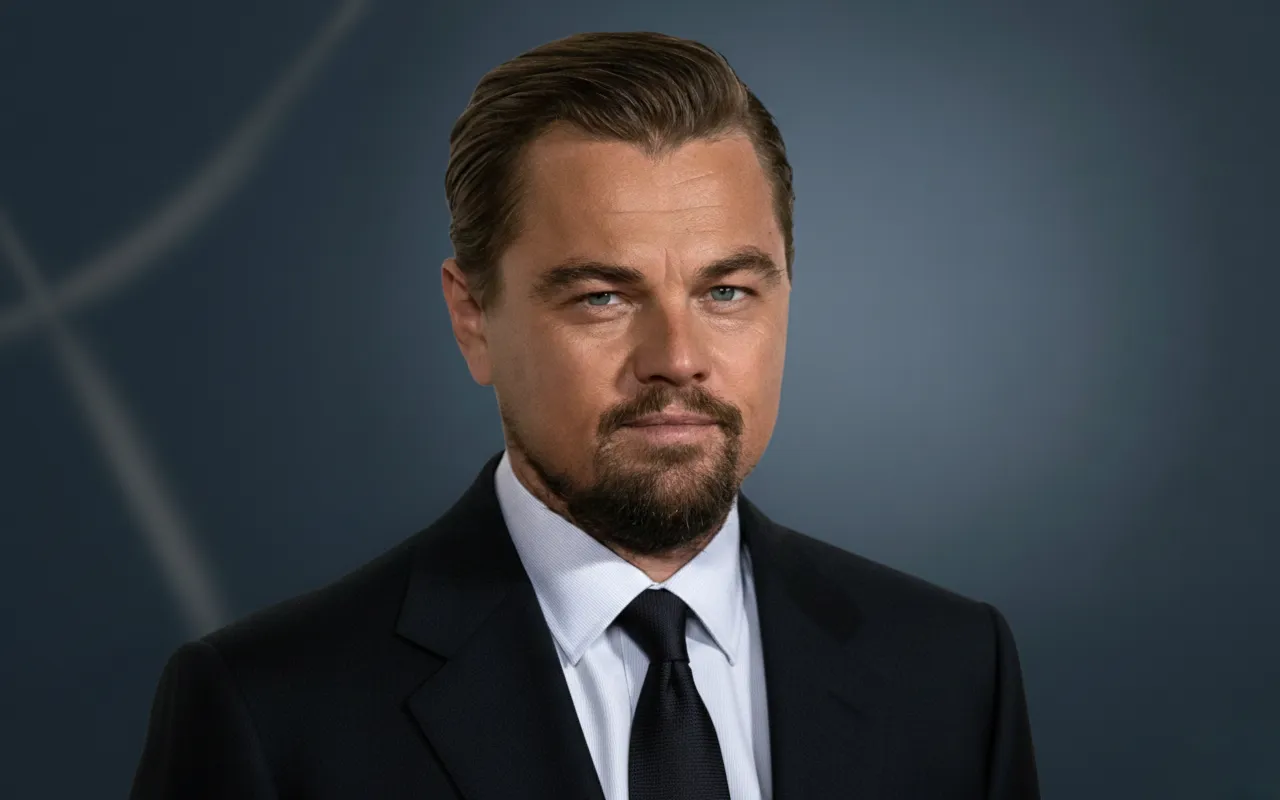
Leonardo DiCaprio is an American actor and film producer whose career is widely examined in contemporary film studies, star theory, and performance analysis. Active since childhood, DiCaprio is known for his sustained engagement with character-driven cinema, his long-term collaborations with leading filmmakers, and his consistent exploration of ambition, identity, power, moral responsibility, and psychological transformation. His body of work reflects a deliberate balance between large-scale commercial filmmaking and artistically rigorous narrative cinema.
Quick Facts
| Field | Details |
|---|---|
| Full Name | Leonardo Wilhelm DiCaprio |
| Date of Birth | November 11, 1974 |
| Age | 51 years (as of 2025) |
| Place of Birth | Los Angeles, California, USA |
| Nationality | American |
| Ethnicity | German and Sicilian ancestry |
| Nickname | Leo |
| Religion | Not publicly disclosed |
| Profession | Actor, film producer |
| Years Active | 1989–present |
| Production Company | Appian Way Productions |
Early Life and Family Background
Leonardo DiCaprio was born in Los Angeles to parents involved in creative and intellectual work. His father worked as an underground comics writer and distributor, while his mother was employed as a legal secretary. His parents separated shortly after his birth, and he was primarily raised by his mother in working-class neighborhoods of Los Angeles.
Growing up in economically modest and socially diverse environments, DiCaprio was exposed early to contrasting realities of opportunity and instability. His early participation in television commercials and educational programming introduced him to professional acting before adolescence, shaping his technical familiarity with performance discipline, emotional adaptability, and on-camera presence.
Family
Parents
| Parent | Details |
|---|---|
| Father | George DiCaprio, underground comics writer and distributor |
| Mother | Irmelin Indenbirken, legal secretary |
Siblings
| Sibling | Details |
|---|---|
| — | No publicly documented siblings |
Education
| Category | Details |
|---|---|
| High School | John Marshall High School (later GED) |
| Field of Study | General education |
| Film School | Did not attend |
| Practical Training | Professional acting experience |
Rather than pursuing formal academic training in acting, DiCaprio developed his craft through sustained professional work, allowing his performance methodology to evolve organically through practice, observation, and long-term collaboration.
Career Development
Career Beginnings
| Film | Year | Notes |
|---|---|---|
| Growing Pains | 1991–1992 | Television breakthrough |
| This Boy’s Life | 1993 | Early critical recognition |
| What’s Eating Gilbert Grape | 1993 | Academy Award nomination |
| The Basketball Diaries | 1995 | Early demonstration of dramatic intensity |
| Romeo + Juliet | 1996 | International youth recognition |
These early performances demonstrated DiCaprio’s unusual emotional range and psychological realism for a young actor, establishing his credibility within serious dramatic cinema well before adulthood.
Transition to Mainstream Cinema
| Phase | Key Works |
|---|---|
| Studio Breakthrough | Titanic (1997) |
| Career Reorientation | Gangs of New York, Catch Me If You Can |
Following unprecedented global success, DiCaprio deliberately redirected his career away from conventional stardom, prioritizing psychologically demanding roles and director-led projects emphasizing narrative ambition and moral consequence.
His selective approach to director-led, conceptually ambitious projects aligns him with filmmakers such as Christopher Nolan, whose emphasis on narrative structure and thematic seriousness mirrors DiCaprio’s own preference for intellectually demanding cinema.
“Leonardo DiCaprio’s career is defined not by sustained fame, but by sustained artistic intention.”
Major Works
| Category | Films |
|---|---|
| Early / Independent | This Boy’s Life, What’s Eating Gilbert Grape |
| Romantic Drama | Titanic, Romeo + Juliet |
| Crime / Thriller | The Departed, Catch Me If You Can, Django Unchained |
| Biographical | The Aviator, The Wolf of Wall Street |
| Science Fiction | Inception, Shutter Island |
| Historical / Survival | The Revenant, Killers of the Flower Moon |
Across genres, DiCaprio consistently treats performance as a vehicle for thematic inquiry rather than spectacle.
Filmmaking Style and Themes
| Aspect | Description |
|---|---|
| Performance Style | Intense, immersive, psychologically grounded |
| Recurring Themes | Ambition, power, identity, moral responsibility |
| Physical Commitment | High, often involving extreme conditions |
| Methodology | Character realism as thematic expression |
DiCaprio’s work is frequently studied for its integration of psychological realism within mainstream narrative frameworks.
Awards and Honors
Academy Awards
| Category | Details |
|---|---|
| Nominations | 7 |
| Wins | 1 |
| Best Actor | The Revenant (2016) |
Other Honors
| Honor | Year |
|---|---|
| BAFTA Best Actor | 2016 |
| Golden Globe Best Actor | 2016 |
| UN Messenger of Peace | 2014 |
Relationship Status and Personal Life
Leonardo DiCaprio has never been married and maintains a high degree of privacy regarding his personal relationships. While his dating history has attracted significant public attention, he consistently avoids formal commentary, reinforcing a clear separation between his private life and professional career.
| Category | Details |
|---|---|
| Marital Status | Unmarried |
| Children | No publicly known children |
Publicly Known Relationships
| Partner | Profession | Period |
|---|---|---|
| Gisele Bündchen | Fashion model | 2000–2005 |
| Bar Refaeli | Model | 2005–2011 |
| Toni Garrn | Model | 2013–2014 |
| Kelly Rohrbach | Model / Actress | 2015–2016 |
| Nina Agdal | Model | 2016–2017 |
| Camila Morrone | Model / Actress | 2017–2022 |
| Vittoria Ceretti | Model | 2023–present |
Despite public speculation, DiCaprio has not publicly confirmed engagement or long-term domestic partnerships, and his personal life remains intentionally understated in comparison to his professional output.
Public Presence and Social Media
Leonardo DiCaprio maintains a selective public presence on social media platforms. His official accounts are primarily used to promote environmental advocacy, humanitarian causes, and professional film projects rather than personal content.
| Platform | Handle / Status |
|---|---|
| @leonardodicaprio (Active) | |
| X (Twitter) | @LeoDiCaprio (Active, limited use) |
| Leonardo DiCaprio (Official page) | |
| TikTok | No official account |
Physical Measurements
Publicly reported reference information
| Measurement | Details |
|---|---|
| Height | Approximately 6 ft (1.83 m) |
| Weight | Approximately 75–78 kg |
| Eye Color | Blue |
| Hair Color | Blonde |
Net Worth and Professional Earnings
Estimated Net Worth
| Field | Details |
|---|---|
| Net Worth | Approximately USD 300 million |
| Basis | Acting and producing career |
Earnings Structure
| Source | Details |
|---|---|
| Actor Fee | USD 20–30 million per film |
| Backend Participation | Profit-sharing agreements |
| Total Earnings per Film | Often exceeds USD 40 million |
DiCaprio’s compensation model emphasizes backend participation and long-term creative involvement.
Lesser Known Facts
- Named after Leonardo da Vinci.
- Avoids franchise-based contracts.
- Produces many of the films he stars in.
- Known for extreme physical commitment to roles.
- Maintains long-term collaborations with select directors.
- Actively supports environmental causes.
FAQs:
Q: Why are Leonardo DiCaprio’s performances considered demanding?
A: Because they often involve psychological intensity, physical endurance, and moral complexity.
Q: Does he attend acting school?
A: No, his training occurred primarily through professional experience.
Q: What defines his career choices?
A: Preference for character-driven, director-led narratives.
Q: What is he most famous for?
A: Titanic, Inception, The Wolf of Wall Street, and The Revenant.
Assessment and Long-Term Significance
Leonardo DiCaprio’s career demonstrates the sustained application of disciplined performance within mainstream cinema. From early television roles to major international productions, his work reflects methodological continuity rather than trend-driven reinvention. He remains a central figure in discussions of modern screen performance and cinematic legacy.
Source Disclaimer:
This profile is compiled from publicly available, reputable institutional sources, including official film industry records, academic film studies references, open-knowledge repositories, and major international media reporting. Sources used in the preparation of this entry include, but are not limited to:
- Academy of Motion Picture Arts and Sciences awards archives
- British Film Institute (BFI) archival records and filmography databases
- Official studio and production company documentation (Appian Way Productions)
- National and international media organizations (including The New York Times, The Guardian, Variety, and Associated Press)
- Open-knowledge reference repositories (including Wikipedia and Wikimedia Commons)
- Portrait and reference imagery sourced from Wikimedia Commons under applicable Creative Commons licenses
While certain biographical and financial details may vary across publications, the information presented reflects prevailing scholarly and journalistic consensus at the time of writing and is subject to periodic editorial review.