
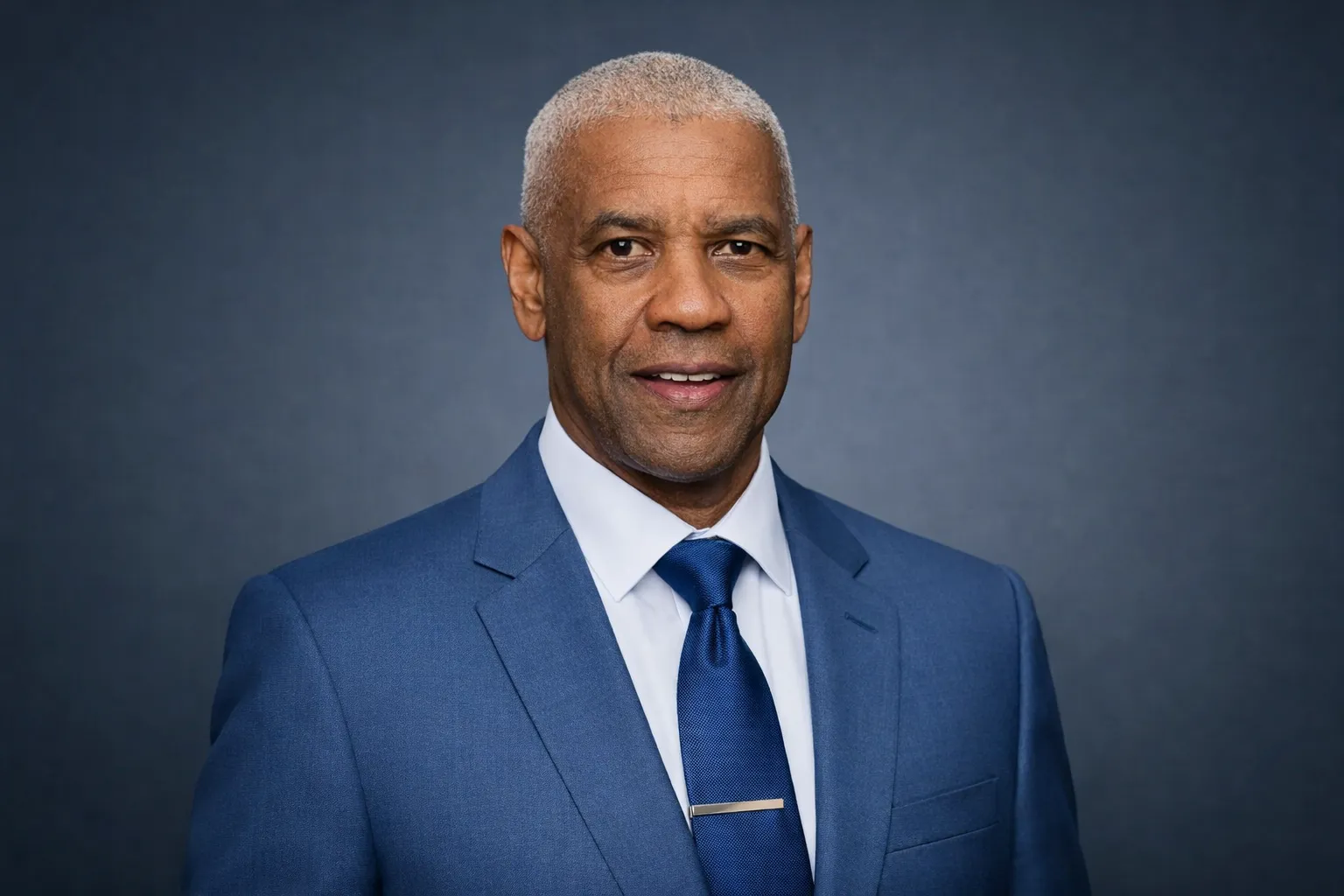
Denzel Washington is an American actor, director, and producer whose career is defined by moral intensity, rhetorical command, and sustained engagement with questions of power, justice, and institutional conflict. Since emerging in the 1980s, he has worked across historical drama, crime thrillers, literary adaptations, and prestige studio cinema, becoming associated with performances that combine controlled authority with emotional volatility. His body of work frequently examines leadership under pressure, ethical ambiguity, and the burdens of individual responsibility within social systems.
Quick Facts
| Field | Details |
|---|---|
| Full Name | Denzel Hayes Washington Jr. |
| Date of Birth | December 28, 1954 |
| Age | 71 years (as of 2026) |
| Place of Birth | Mount Vernon, New York, USA |
| Nationality | American |
| Profession | Actor, director, producer |
| Years Active | 1975–present |
| Production Company | Mundy Lane Entertainment |
Early Life and Background
Denzel Washington was born in Mount Vernon, New York, to a Pentecostal minister father and a beauty salon owner mother. His early environment combined religious discipline, working-class entrepreneurship, and close exposure to public oratory through church culture. After his parents’ divorce, he was sent to a private preparatory school, an intervention he has frequently credited with altering his trajectory during adolescence.
This foundation in sermon structure, rhetorical emphasis, and moral framing later became central to his performance style, particularly in roles requiring courtroom persuasion, military authority, or ideological confrontation.
Family
Parents
| Parent | Details |
|---|---|
| Father | Denzel Hayes Washington Sr., Pentecostal minister |
| Mother | Lennis “Lynne” Washington, beauty salon owner |
Siblings
| Sibling | Details |
|---|---|
| David Washington | Brother |
| Lorice Washington | Sister |
Education
| Category | Details |
|---|---|
| College | Fordham University |
| Degree | B.A. in Drama and Journalism |
| Graduate Training | American Conservatory Theater (San Francisco) |
| Acting Method | Classically trained, stage-rooted performance discipline |
Career Development
Career Beginnings
| Film / Series | Year | Notes |
|---|---|---|
| St. Elsewhere | 1982–1988 | Television breakthrough |
| Cry Freedom | 1987 | First Academy Award nomination |
| Glory | 1989 | Academy Award (Supporting Actor) |
Transition to Prestige and Moral-Centered Cinema
| Phase | Key Works |
|---|---|
| Biographical Authority | Malcolm X, The Hurricane |
| Institutional Conflict | Crimson Tide, The Pelican Brief |
| Corruption & Moral Collapse | Training Day |
| Literary Adaptation | Fences |
During the 1990s and early 2000s, Washington consolidated his position as a leading interpreter of historical and politically charged figures. His portrayal of Malcolm X marked a decisive moment in American biographical cinema, combining intellectual articulation with psychological complexity. Subsequent roles expanded his range into morally compromised territory, most notably in Training Day, which earned him a second Academy Award and disrupted expectations of heroic continuity.
Washington’s body of work reflects a deliberate alignment with morally complex protagonists and narratives shaped by institutional friction. His collaborations with directors such as Spike Lee and Antoine Fuqua illustrate a sustained interest in stories rooted in ethical conflict and social consciousness rather than spectacle-driven franchise cinema. This disciplined career trajectory echoes Tom Hanks’ observation that “If it wasn’t hard, everyone would do it” a sentiment that resonates with Washington’s consistent gravitation toward demanding roles that require psychological depth and moral intensity.
Contemporary & Late-Career Phase
| Phase | Representative Works |
|---|---|
| Stage-to-Screen Adaptation | Fences |
| Action-Driven Moral Vigilantism | The Equalizer series |
| Shakespearean Return | The Tragedy of Macbeth |
Washington’s later career demonstrates dual commitments: commercially viable action franchises and prestige literary adaptations. His performance in The Tragedy of Macbeth reaffirmed his classical stage grounding, while The Equalizer series expanded his appeal to global action audiences without abandoning thematic emphasis on justice and retribution.
Producer-Director Leadership
| Project | Role |
|---|---|
| Antwone Fisher | Director |
| The Great Debaters | Director / Actor |
| Fences | Director / Actor |
| A Journal for Jordan | Director |
Awards and Honors
| Award | Details |
|---|---|
| Academy Awards | 2 wins (Supporting Actor, Best Actor) |
| Golden Globe Awards | Multiple wins |
| Tony Award | Best Actor (Fences) |
| Presidential Medal of Freedom | 2022 |
Relationship Status and Personal Life
| Category | Details |
|---|---|
| Marital Status | Married |
| Children | Four |
| Partner | Profession | Period |
|---|---|---|
| Pauletta Washington | Actress and musician | 1983–present |
| Child | Notes |
|---|---|
| John David Washington | Actor and former professional athlete |
| Katia Washington | Film producer |
| Olivia Washington | Actress |
| Malcolm Washington | Director and filmmaker |
Public Presence and Social Media
| Platform | Handle / Status |
|---|---|
| @denzelwashington.official (fan-run account; not confirmed personal account) | |
| X (Twitter) | @OfficiaIDenzeI (fan-associated account; no verified personal use) |
| Official-titled pages exist but not verified as his personal account |
Note: Denzel Washington has publicly stated that he does *not* actively use social media himself and prefers to focus on his craft and real-world engagement rather than maintaining personal profiles online.
Physical Measurements
| Measurement | Details |
|---|---|
| Height | Approximately 6 ft 1 in (1.85 m) |
| Eye Color | Dark Brown |
| Hair Color | Black (graying) |
Net Worth and Earnings
| Field | Details |
|---|---|
| Net Worth | Estimated USD 280–300 million |
| Actor Fee | USD 20+ million per film (peak) |
| Backend Participation | Selective profit-sharing agreements |
| Production Revenue | Directorial and production ventures |
Trivia / Lesser Known Facts
- Originally studied journalism before committing fully to acting.
- Maintains strong ties to stage theatre alongside film work.
- Frequently portrays leaders confronting institutional crisis.
- Avoids heavy reliance on shared-universe franchise filmmaking.
FAQs
Q: What defines Denzel Washington’s performance style?
A: Controlled intensity, rhetorical precision, and moral gravitas.
Q: Has he worked extensively in theatre?
A: Yes. His stage background significantly shapes his screen presence.
Q: What distinguishes his career longevity?
A: A balance of prestige drama, historical biography, and disciplined commercial projects.
Assessment and Long-Term Significance
Denzel Washington’s career represents the sustained presence of classical authority within contemporary American cinema. Through disciplined stage training, strategic role selection, and selective directorial leadership, he has maintained artistic credibility across shifting industrial eras. His legacy lies not merely in awards recognition, but in redefining how moral gravity and rhetorical command function within modern screen performance.
Source Disclaimer
This profile is compiled from publicly available, reputable institutional and journalistic sources, including official film industry archives, academic film scholarship, award institution records, and major international media reporting. Sources consulted include, but are not limited to:
- Academy of Motion Picture Arts and Sciences archives
- American Film Institute (AFI) records
- Tony Awards and Broadway League documentation
- Presidential honors archives
- Major media organizations (The New York Times, The Guardian, Variety, Associated Press)
- Open-knowledge repositories including Wikipedia and Wikimedia Commons
While certain biographical and financial details may vary across publications, the information presented reflects prevailing scholarly and journalistic consensus at the time of writing and is subject to periodic editorial review.