
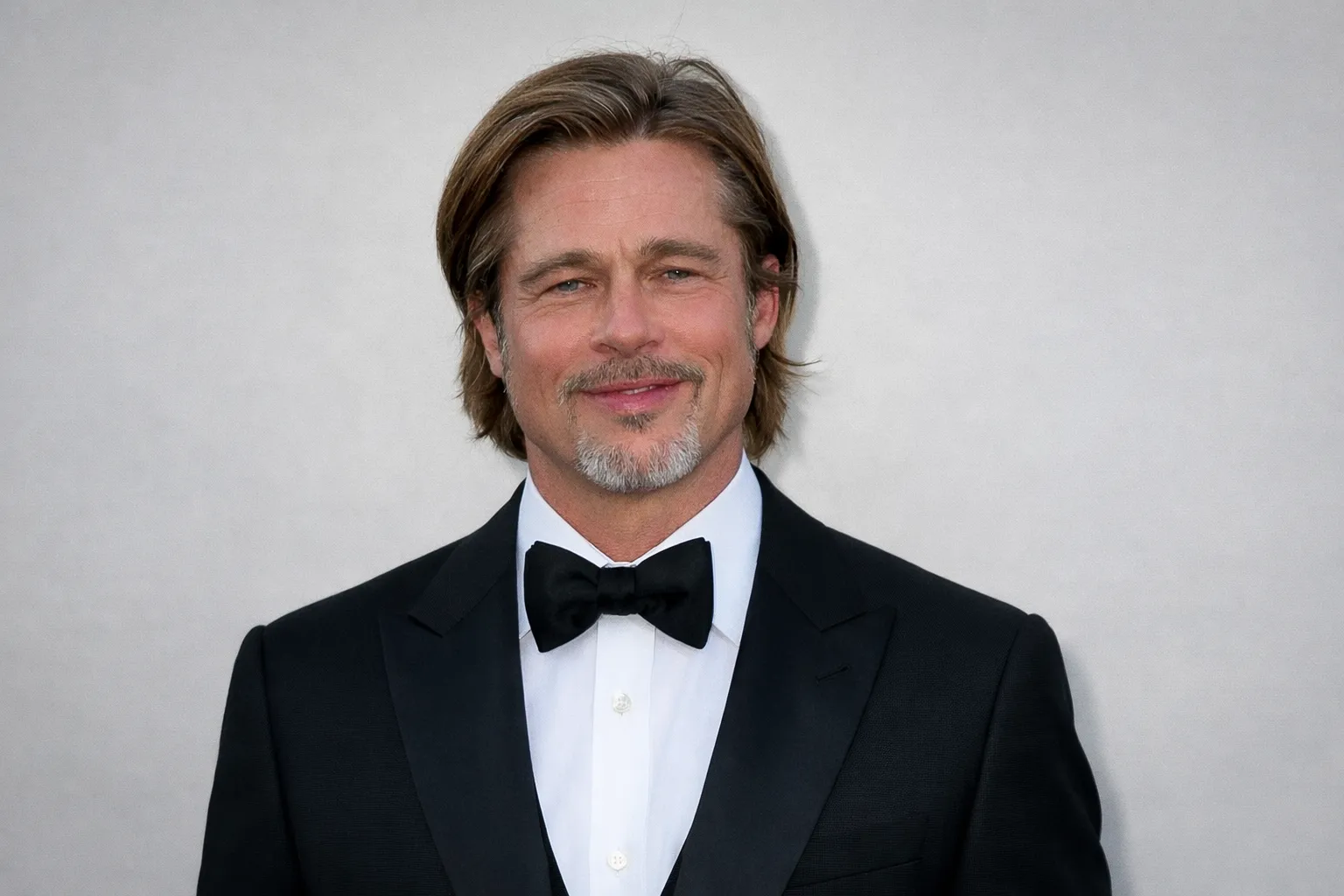
Brad Pitt is an American actor and film producer whose career occupies a central position in contemporary Hollywood star studies, performance theory, and modern studio-era production analysis. Active since the late 1980s, Pitt is recognized for combining mainstream box-office appeal with sustained engagement in character-driven, auteur-oriented cinema. His body of work reflects a long-term commitment to narrative experimentation, moral complexity, masculine identity deconstruction, and producer-led artistic stewardship.
Through his dual role as performer and founder of Plan B Entertainment, Pitt has significantly influenced the development of socially conscious and formally ambitious American cinema in the twenty-first century.
Quick Facts
| Field | Details |
|---|---|
| Full Name | William Bradley Pitt |
| Date of Birth | December 18, 1963 |
| Age | 61 years (as of 2025) |
| Place of Birth | Shawnee, Oklahoma, USA |
| Nationality | American |
| Ethnicity | English, Irish, German ancestry |
| Profession | Actor, film producer |
| Years Active | 1987–present |
| Production Company | Plan B Entertainment |
Early Life and Background
Brad Pitt was born in Shawnee, Oklahoma, and raised in Springfield, Missouri, within a conservative Midwestern social environment emphasizing discipline, responsibility, and community values. His father worked in industrial management, while his mother was a school counselor.
He attended the University of Missouri, studying journalism with a focus on advertising. Two credits short of graduation, Pitt relocated to Los Angeles to pursue acting, initiating the professional transformation that would place him among the defining screen figures of his generation.
Family
Parents
| Parent | Details |
|---|---|
| Father | William Alvin Pitt, transportation executive |
| Mother | Jane Etta Hillhouse, school counselor |
Siblings
| Sibling | Details |
|---|---|
| Doug Pitt | Younger brother |
| Julie Pitt Neal | Younger sister |
Education
| Category | Details |
|---|---|
| University | University of Missouri |
| Field of Study | Journalism (Advertising) |
| Film School | Did not attend |
| Practical Training | Private acting classes and professional experience |
Pitt’s development as a performer emerged through private coaching, audition-based discipline, and long-term collaboration rather than formal conservatory training.
Career Development
Career Beginnings
| Film / Series | Year | Notes |
|---|---|---|
| Dallas | 1987–1988 | Television debut |
| Thelma & Louise | 1991 | Breakthrough role |
| A River Runs Through It | 1992 | Dramatic credibility |
| Legends of the Fall | 1994 | Romantic epic stardom |
| Seven | 1995 | Psychological transition |
His early career balanced romantic lead appeal with increasingly dark and morally conflicted character studies.
Transition to Auteur-Driven Cinema
| Phase | Key Works |
|---|---|
| Psychological Realism | Seven, Twelve Monkeys |
| Narrative Experimentation | Fight Club, Snatch |
| Global Stardom with Depth | Troy, Babel |
| Contemporary Prestige Blockbuster | F1 (2025) |
In 2025, Pitt starred in the Formula One racing epic F1, a large-scale international production that became one of the highest-grossing films of his career. The film marked a rare convergence of prestige performance and blockbuster spectacle, positioning Pitt as both a leading global box-office presence and a mature dramatic anchor within contemporary franchise-scale cinema.
The 2024 Apple Original Wolfs, reuniting Pitt with George Clooney under the direction of Jon Watts, marked a decisive shift toward prestige streaming-led theatrical cinema. Rather than traditional studio tentpoles, Pitt increasingly aligned his late-career output with curated, platform-anchored releases emphasizing auteur control, selective global rollout, and long-term collaborator continuity.
Pitt’s sustained preference for director-driven narrative cinema aligns him with contemporaries such as Leonardo DiCaprio, whose career similarly reflects long-term artistic curation rather than franchise dependency. This parallel positioning becomes especially evident in the work of filmmakers like Christopher Nolan, whose emphasis on narrative architecture, moral ambiguity, and conceptual rigor represents the same auteur-centric filmmaking tradition that defines Pitt’s production and performance strategy.
Brad Pitt’s legacy is shaped less by stardom than by long-term artistic stewardship.
Major Works
| Category | Films |
|---|---|
| Psychological / Existential | Fight Club, Seven, Twelve Monkeys |
| Crime / Thriller | Ocean’s Trilogy, Snatch, Killing Them Softly |
| Historical / War | Troy, Fury |
| Social Drama | Babel, The Big Short |
| Fantasy / Art Cinema | The Tree of Life, The Assassination of Jesse James by the Coward Robert Ford |
| Comedy / Satire | Burn After Reading, Once Upon a Time in Hollywood |
| Contemporary Action / Motorsport | F1 (2025) |
Filmmaking Style and Themes
| Aspect | Description |
|---|---|
| Performance Style | Understated, psychologically introspective |
| Recurring Themes | Identity fracture, masculinity, morality, alienation |
| Producer Role | High creative control via Plan B |
| Methodology | Character-driven narrative realism |
Pitt’s work is frequently examined for redefining male star identity through vulnerability, moral uncertainty, and narrative deconstruction.
Awards and Honors
Academy Awards
| Category | Details |
|---|---|
| Wins | 2 |
| Best Supporting Actor | Once Upon a Time in Hollywood (2020) |
| Best Picture (Producer) | 12 Years a Slave (2014) |
Other Honors
| Honor | Year |
|---|---|
| Golden Globe Best Supporting Actor | 2020 |
| BAFTA Best Supporting Actor | 2020 |
| Cannes Palm d’Or (Producer) | 2011 |
Relationship Status and Personal Life
| Category | Details |
|---|---|
| Marital Status | Divorced |
| Children | Six |
| Partner | Profession | Period |
|---|---|---|
| Jennifer Aniston | Actress | 2000–2005 |
| Angelina Jolie | Actress / Filmmaker | 2014–2016 |
Pitt maintains a selective public presence and avoids sustained commentary on personal affairs.
Public Presence and Social Media
Brad Pitt maintains a limited but official presence on major social platforms. His accounts are primarily used for film promotion, philanthropic initiatives, and Plan B Entertainment–related announcements rather than personal lifestyle content.
| Platform | Handle / Status |
|---|---|
| @bradpittofflcial (Verified) | |
| X (Twitter) | @bradpitt (Verified) |
| Brad Pitt (Official page) |
Physical Measurements
| Measurement | Details |
|---|---|
| Height | Approximately 5 ft 11 in (1.80 m) |
| Eye Color | Blue |
| Hair Color | Blonde |
Net Worth and Earnings
Estimated Net Worth
| Field | Details |
|---|---|
| Net Worth | Estimated USD 400 million |
| Basis | Acting and film production |
Earnings Structure
| Source | Details |
|---|---|
| Actor Fee | USD 20–30 million per film |
| Industry Benchmark | His reported USD 30 million fee for F1 (2025) established a new benchmark for Apple-backed theatrical talent contracts |
| Backend Participation | Extensive profit-sharing |
| Producer Revenue | Plan B film profits |
Lesser Known Facts
- Produces socially conscious cinema through Plan B
- Avoids franchise dependency
- Maintains long-term auteur collaborations
- Integrates producer authority into performance choices
- One of his highest-grossing career films is F1 (2025)
FAQs
Q: What distinguishes Brad Pitt’s career?
A: His integration of auteur cinema within mainstream stardom.
Q: Does he prioritize producing?
A: Yes, producing is central to his career legacy.
Q: What defines his performance style?
A: Psychological subtlety and moral ambiguity.
Assessment and Long-Term Significance
Brad Pitt’s career represents a transformation of the modern Hollywood star into a producer-curated artistic steward. Through sustained collaboration, moral narrative commitment, and producer-driven cultural influence, Pitt has reshaped contemporary American cinema’s relationship between celebrity and authorship.
The commercial and cultural success of F1 (2025) reinforced his continued relevance across generational audiences, demonstrating his ability to integrate classical star authority into modern spectacle cinema while maintaining thematic credibility.
He remains a central figure in discussions of modern performance theory, producer power, and the evolving architecture of global studio filmmaking.
Source Disclaimer
This profile is compiled from publicly available, reputable institutional sources, including official film industry records, academic film studies references, open-knowledge repositories, and major international media reporting. Sources used in the preparation of this entry include, but are not limited to:
- Academy of Motion Picture Arts and Sciences awards archives
- British Film Institute (BFI) archival records and filmography databases
- Official studio and production company documentation (Plan B Entertainment)
- National and international media organizations (including The New York Times, The Guardian, Variety, and Associated Press)
- Open-knowledge reference repositories (including Wikipedia and Wikimedia Commons)
- Portrait and reference imagery sourced from Wikimedia Commons under applicable Creative Commons licenses
While certain biographical and financial details may vary across publications, the information presented reflects prevailing scholarly and journalistic consensus at the time of writing and is subject to periodic editorial review.