
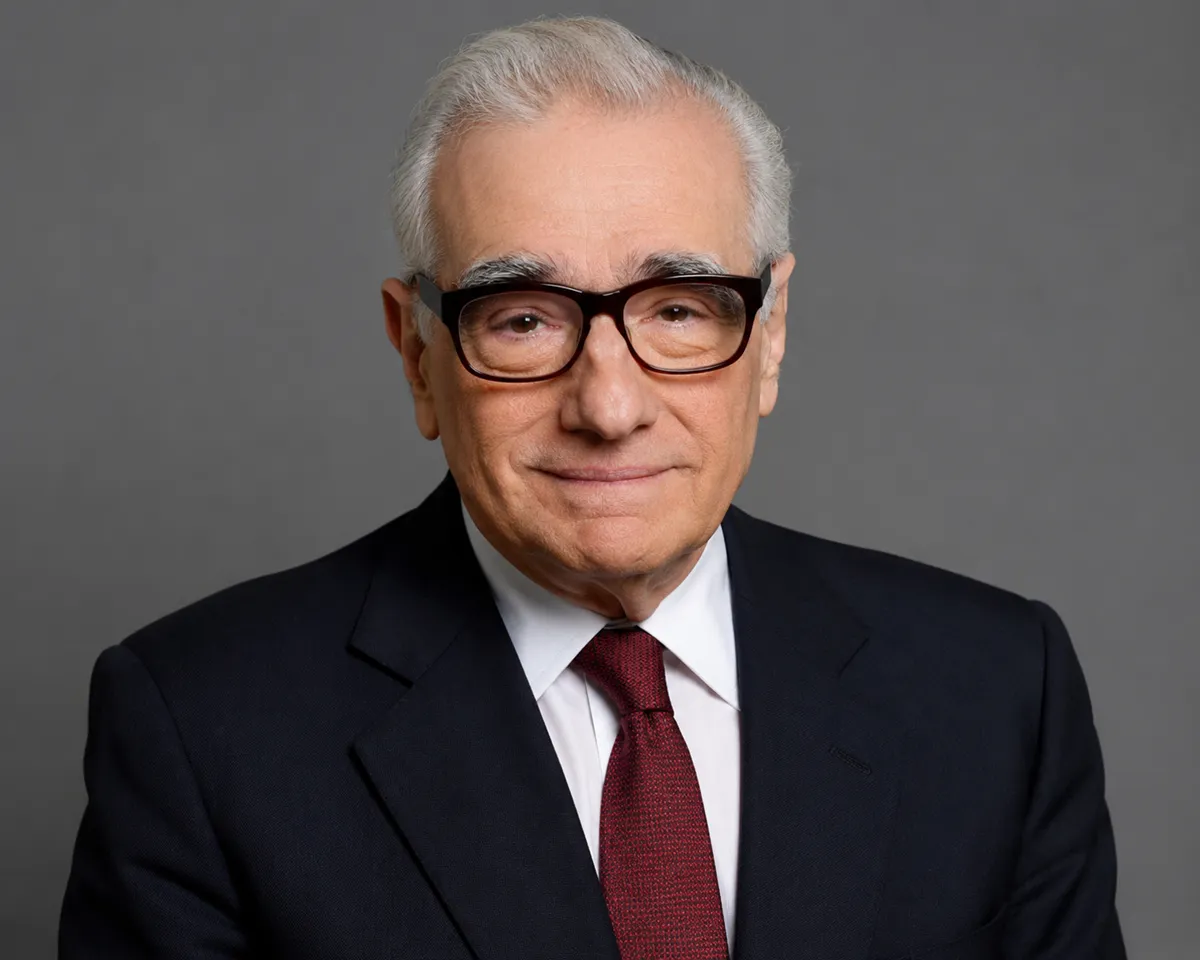
Martin Scorsese is an American film director, producer, screenwriter, and film historian widely regarded as one of the greatest filmmakers of all time. Active since the 1960s, he is best known for acclaimed films such as Taxi Driver, Raging Bull, Goodfellas, The Departed, and The Irishman. His work often explores themes of crime, faith, ambition, identity, and morality, helping shape modern American cinema across more than five decades.
Quick Facts
| Field | Details |
|---|---|
| Full Name | Martin Charles Scorsese |
| Date of Birth | November 17, 1942 |
| Age | 83 years (as of 2026) |
| Place of Birth | Queens, New York City, New York, United States |
| Nationality | American |
| Ethnicity | Italian-American |
| Languages | English, Italian (family heritage) |
| Profession | Film director, producer, screenwriter, actor, film historian |
| Years Active | 1963–present |
Early Life and Family Background
Martin Scorsese was born on November 17, 1942, in Queens, New York City, and spent much of his childhood in Manhattan’s Little Italy neighborhood. Raised in a working-class Italian-American family, he developed an early fascination with storytelling, religion, and cinema. Because severe asthma limited his participation in outdoor activities, films became a major source of entertainment, education, and inspiration throughout his youth.
The social environment of Little Italy, together with the influence of Catholic traditions, shaped many of the themes that would later define his filmmaking. Questions of guilt, redemption, loyalty, violence, and faith appear repeatedly throughout his body of work and remain central subjects in academic discussions of his films.
Family
Parents
| Parent | Details |
|---|---|
| Father | Charles Scorsese, garment worker and actor |
| Mother | Catherine Scorsese, seamstress and actress |
Siblings
| Sibling | Details |
|---|---|
| Frank Scorsese | Brother; largely private life |
Education
| Category | Details |
|---|---|
| High School | Cardinal Hayes High School |
| University | New York University |
| Degree | Bachelor of Science |
| Graduate Degree | Master of Fine Arts |
| Field of Study | Film and Cinema |
Scorsese’s academic training at New York University provided him with a strong foundation in film history, criticism, editing, and production. His exposure to both American and international cinema contributed significantly to the development of his distinctive artistic vision.
Career Development
Career Beginnings
| Film | Year | Notes |
|---|---|---|
| What’s a Nice Girl Like You Doing in a Place Like This? | 1963 | Early short film |
| Who’s That Knocking at My Door | 1967 | Feature debut |
| Boxcar Bertha | 1972 | First major studio project |
| Mean Streets | 1973 | Breakthrough success |
These early productions established Scorsese as one of the most promising filmmakers of the New Hollywood era. His energetic visual style and focus on morally conflicted characters quickly attracted critical attention.
Rise to International Recognition
As his reputation expanded, Scorsese became one of the defining figures of modern American cinema. His collaborations with Robert De Niro and later Leonardo DiCaprio produced some of the most celebrated director-actor partnerships in film history. He is frequently discussed alongside filmmakers such as Francis Ford Coppola, Steven Spielberg, and George Lucas for his role in shaping the evolution of Hollywood during the late twentieth century. His influence has also extended across generations of actors and producers, including contemporary Hollywood figures such as Brad Pitt, whose work has contributed to the continued prominence of prestige filmmaking.
| Film | Year | Impact |
|---|---|---|
| Taxi Driver | 1976 | Palme d’Or winner and international breakthrough |
| Raging Bull | 1980 | Widely regarded as one of the greatest films ever made |
| Goodfellas | 1990 | Landmark crime film |
| Casino | 1995 | Expanded influence within crime cinema |
| The Departed | 2006 | Academy Award for Best Director |
“Scorsese’s cinema is distinguished by its exploration of morality, ambition, violence, and redemption within modern society.”
Major Works
| Category | Films |
|---|---|
| Crime Drama | Mean Streets, Goodfellas, Casino, The Departed, The Irishman |
| Psychological Drama | Taxi Driver, Raging Bull, Bringing Out the Dead |
| Historical Drama | Gangs of New York, The Aviator, Killers of the Flower Moon |
| Religious and Philosophical Cinema | The Last Temptation of Christ, Kundun, Silence |
| Music Documentaries | No Direction Home, George Harrison: Living in the Material World |
Relationship Status and Personal Life
| Category | Details |
|---|---|
| Marital Status | Married |
| Spouse | Helen Morris (since 1999) |
| Previous Marriages | Five |
| Children | Three daughters |
Children
| Name | Details |
|---|---|
| Catherine Scorsese | Film producer and actress |
| Domenica Cameron-Scorsese | Writer, director, and actress |
| Francesca Scorsese | Actress and media personality |
Public Presence and Social Media
Martin Scorsese does not maintain a highly active personal social media presence. Nevertheless, film institutions, archives, production companies, and fan communities regularly document his public appearances, interviews, restoration projects, and cinematic contributions.
| Platform | Presence |
|---|---|
| Film and fan pages | |
| X (Twitter) | Film discussion communities |
| Established film and cinema groups |
Net Worth and Professional Earnings
| Field | Details |
|---|---|
| Estimated Net Worth | USD 200–250 million |
| Income Sources | Directing, producing, screenwriting, royalties, film preservation initiatives |
Lesser Known Facts
- Martin Scorsese originally considered becoming a Catholic priest before choosing filmmaking.
- He has suffered from asthma since childhood.
- He founded and supports several major film preservation organizations.
- He frequently appears in cameo roles in his own films.
- He is considered one of the foremost historians of world cinema.
- Italian neorealism significantly influenced his filmmaking style.
- He has received numerous lifetime achievement awards from major film institutions.
- Scorsese is also respected for documentary filmmaking in addition to narrative cinema.
FAQs
Q: Why is Martin Scorsese considered one of the greatest directors of all time?
A: His films combine artistic innovation, technical mastery, cultural significance, and psychological complexity across more than five decades of filmmaking.
Q: What themes recur most frequently in Martin Scorsese’s films?
A: Crime, morality, faith, guilt, redemption, violence, ambition, identity, and personal responsibility.
Q: Which actors are most associated with Martin Scorsese?
A: Robert De Niro, Leonardo DiCaprio, Joe Pesci, Harvey Keitel, and Daniel Day-Lewis are among his most notable collaborators.
Q: Did Martin Scorsese win an Academy Award for Best Director?
A: Yes. He won the Academy Award for Best Director for The Departed (2006).
Q: What is Martin Scorsese best known for?
A: Taxi Driver, Raging Bull, Goodfellas, Casino, The Departed, The Irishman, and Killers of the Flower Moon.
Assessment and Long-Term Significance
Martin Scorsese’s career demonstrates the sustained influence of auteur-driven filmmaking within both popular and academic cinema. His work has shaped discussions of narrative form, genre filmmaking, visual style, cultural identity, and film preservation. For general audiences, he remains one of the most recognizable directors in cinema history. For students and scholars, his films continue to serve as important case studies in film theory, American culture, and cinematic storytelling.
Source Disclaimer:
This profile is compiled from publicly available, reputable institutional sources, including official film industry records, academic film studies references, film preservation organizations, open-knowledge repositories, and major international media reporting. Sources used in the preparation of this entry include, but are not limited to:
- Academy of Motion Picture Arts and Sciences archives
- The Film Foundation records and preservation initiatives
- New York University film archives and educational resources
- National and international media organizations including The New York Times, Variety, The Guardian, and Associated Press
- Open-knowledge reference repositories including Wikipedia and Wikimedia Commons
- Portrait and reference imagery sourced from Wikimedia Commons under applicable Creative Commons licenses
While certain biographical and financial details may vary across publications, the information presented reflects prevailing scholarly and journalistic consensus at the time of writing and is subject to periodic editorial review.