
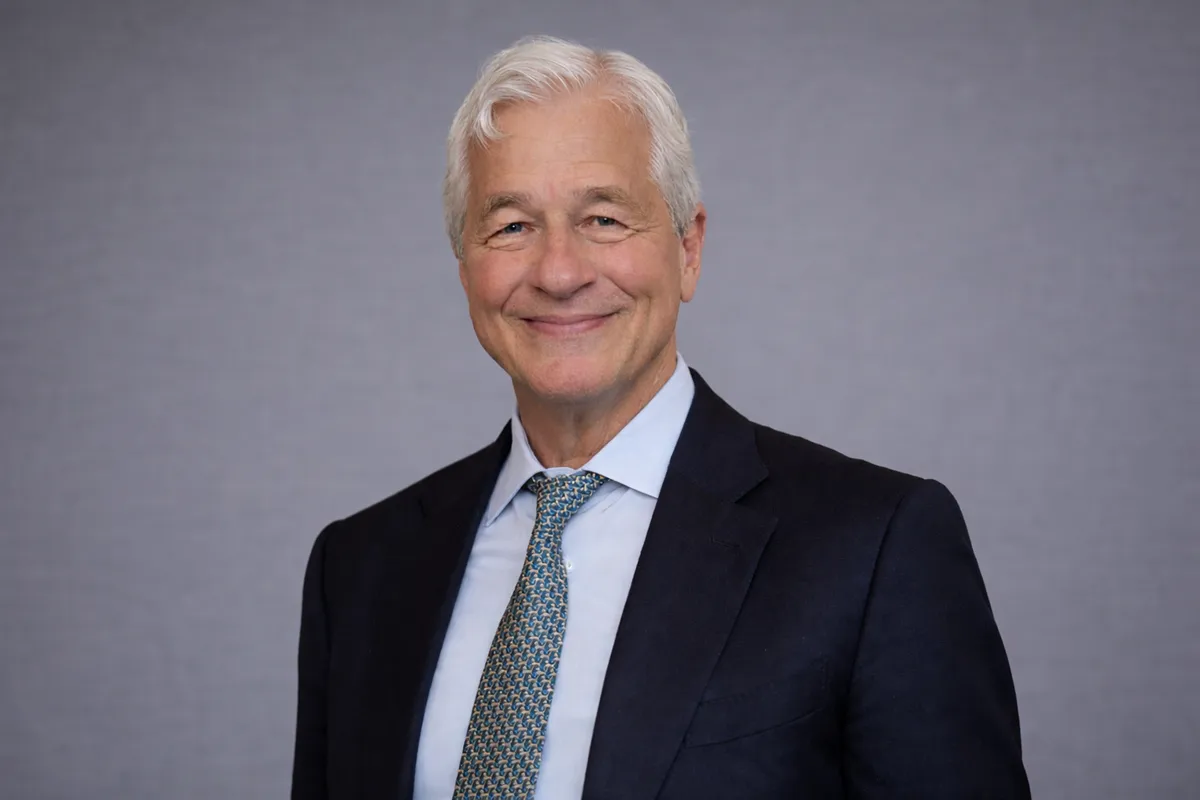
James “Jamie” Dimon is an American banking executive who has served as Chairman and Chief Executive Officer of JPMorgan Chase since 2005–2006. Widely regarded as one of the most influential figures in global finance, his tenure spans the pre-2008 leverage era, the global financial crisis, and the regulatory reconstruction that followed under Dodd-Frank and Basel III reforms. Under his leadership, JPMorgan expanded from roughly $1.1 trillion to over $3 trillion in assets, reinforcing its position as the largest U.S. bank and a designated Systemically Important Financial Institution (SIFI), with his legacy defined by capital discipline, crisis management, and institutional consolidation.
Quick Facts
| Field | Details |
|---|---|
| Full Name | James Dimon |
| Date of Birth | March 13, 1956 |
| Age | 70 years (as of 2026) |
| Place of Birth | New York City, USA |
| Nationality | American |
| Ethnicity | Greek-American |
| Languages | English |
| Profession | Banking Executive |
| Current Role | Chairman & CEO, JPMorgan Chase |
| Years Active | 1982–present |
Early Life and Family Background
Jamie Dimon was born in New York City into a Greek-American family with professional ties to finance. His father worked as a stockbroker, exposing him early to market cycles, brokerage culture, and risk awareness. This early proximity to financial systems shaped his understanding of institutional markets and long-term capital discipline. Unlike founder-entrepreneurs, Dimon’s formative years positioned him within established financial structures rather than innovation-driven startup culture.
Family
Parents
| Parent | Details |
|---|---|
| Father | Theodore Dimon (Stockbroker) |
| Mother | Themis Dimon |
Siblings
| Name | Relation / Details |
|---|---|
| Peter Dimon | Brother |
| Ted Dimon | Brother |
Spouse & Children
| Name | Relation / Details |
|---|---|
| Judith Kent | Spouse |
| Children | Three daughters (Julia Dimon, Laura Dimon, Kara Leigh Dimon) |
Education
| Category | Details |
|---|---|
| University | Tufts University |
| Graduate School | Harvard Business School |
| Degrees | B.A.; MBA |
| Academic Distinction | Baker Scholar (Top 5% of MBA class) |
Career Development
Early Career and Institutional Formation
Dimon began his career at American Express under Sandy Weill during a period marked by large-scale financial mergers. His involvement in the consolidation processes that contributed to the formation of Citigroup in the 1990s provided experience in balance-sheet integration, capital restructuring, and regulatory navigation. These formative experiences shaped his executive approach to institutional consolidation rather than entrepreneurial disruption.
Career Timeline
| Year | Milestone |
|---|---|
| 2000 | Became CEO of Bank One Corporation |
| 2004 | Bank One merged with JPMorgan Chase |
| 2005 | Appointed CEO of JPMorgan Chase |
| 2006 | Became Chairman of the Board |
| 2008–2009 | Led Bear Stearns and Washington Mutual acquisitions during crisis stabilization |
| 2010s–2020s | Strengthened capital buffers under Basel III and expanded digital banking initiatives |
Notable Strategic Actions
- Acquisition of Bear Stearns, stabilizing segments of the investment banking sector during systemic collapse.
- Acquisition of Washington Mutual banking assets, expanding retail deposit base and strengthening funding stability.
- Implementation of high-capital “fortress balance sheet” strategy, maintaining capital ratios above regulatory minimums.
- Compliance and adaptation to Dodd-Frank Act provisions, including annual CCAR stress testing.
- Integration of liquidity coverage requirements and living will frameworks into governance architecture.
- Expansion into digital banking platforms and modernization of payments infrastructure.
Key Achievements
- Oversaw JPMorgan’s rise to the largest U.S. bank by total assets.
- Maintained consistent profitability in post-crisis capital-constrained environments.
- Strengthened Tier 1 capital ratios compared to pre-2008 levels.
- Successfully navigated enhanced supervisory oversight as a SIFI-designated institution.
- Maintained executive leadership continuity across two decades of regulatory transition.
Broader Contextual Comparison
Within global corporate leadership, Dimon represents the regulatory-embedded executive archetype. Unlike pre-2008 Wall Street leaders who emphasized leverage expansion and trading-driven profitability, his leadership reflects adaptation to capital discipline and supervisory scrutiny. Compared to founder-led technology executives, his authority derives from institutional governance rather than ownership control.
Public Positioning
Through detailed annual shareholder letters, Dimon frequently addresses macroeconomic conditions including inflation cycles, fiscal infrastructure investment, geopolitical instability, and monetary policy tightening. These communications extend beyond corporate reporting and contribute to broader economic discourse.
Public Response & Criticism
Supporters credit Dimon with embedding disciplined capital governance and enhancing institutional resilience. Critics argue that post-crisis consolidation increased concentration within U.S. banking, reinforcing “too big to fail” dynamics. This tension — resilience through scale versus systemic dependency on fewer institutions — remains central to evaluating his legacy.
Public Presence & Social Media
| Platform | Handle / Details |
|---|---|
| X (Twitter) | No verified personal account; appears through @jpmorgan corporate communications |
| No personal public profile; featured via JPMorgan Chase executive page | |
| No personal account; institutional presence via @jpmorgan | |
| YouTube | Featured in JPMorgan Chase official channel interviews and shareholder updates |
| Corporate Website | Executive biography available on JPMorgan Chase official site |
| Shareholder Letters | Published annually on JPMorgan Chase Investor Relations page |
Jamie Dimon does not maintain active personal social media accounts. His public communications are primarily delivered through JPMorgan Chase shareholder letters, earnings calls, regulatory filings, media interviews, and official corporate publications.
Net Worth & Earnings
| Field | Details |
|---|---|
| Estimated Net Worth | ~$140 million – $240 million USD (varies by equity valuation and compensation reporting) |
| Annual Base Salary | $1.5 million USD (standard executive salary reported by JPMorgan filings) |
| Annual Total Compensation (Recent Years) | $30 million – $40 million USD (including bonuses & stock awards, variable by year) |
| Equity Holdings | Stock awards and long-term incentives valued ~ $100M+ USD (subject to market fluctuation) |
| Income Sources | Base salary, annual bonus, stock awards, long-term performance incentives, deferred compensation |
Notes: Net worth estimates vary widely because executive wealth is largely tied to JPMorgan Chase stock compensation, which fluctuates with share price (historically between $130 – $180+ per share over the late 2010s and early 2020s). Annual total compensation also varies depending on performance metrics and deferred equity vesting schedules reported in proxy filings.
This financial profile reflects publicly disclosed figures from JPMorgan Chase proxy statements and executive compensation reports, combined with widely published financial press estimates for long-term equity value as of 2025.
Physical Measurements
| Attribute | Details |
|---|---|
| Height | Approximately 5 ft 10 in (public estimate) |
| Eye Color | Brown |
| Hair Color | Gray |
| Build | Average |
Trivia / Lesser Known Facts
- Survived throat cancer treatment in 2014 and emergency heart surgery in 2020.
- Frequently mentioned in policy discussions as a potential Treasury leadership candidate.
- One of the longest-serving CEOs among major global banks.
- Advocates infrastructure investment and workforce development initiatives.
FAQs
Q: What is Jamie Dimon best known for?
A: Jamie Dimon is best known for leading JPMorgan Chase through the 2008 global financial crisis and overseeing its expansion into the largest U.S. bank by assets. His leadership is associated with crisis-era consolidation, capital discipline, and regulatory adaptation.
Q: How long has Jamie Dimon served as CEO of JPMorgan Chase?
A: He became Chief Executive Officer in 2005 and Chairman of the Board in 2006, making him one of the longest-serving CEOs among major global banks.
Q: What was JPMorgan’s role during the 2008 financial crisis?
A: During the crisis, JPMorgan acquired Bear Stearns and Washington Mutual’s banking assets under federal stabilization frameworks. These acquisitions expanded its asset base and reinforced its systemic importance.
Q: What is the “fortress balance sheet” strategy?
A: The fortress balance sheet refers to maintaining capital and liquidity levels above regulatory minimums to ensure resilience during economic downturns and stress-test scenarios.
Q: How did post-crisis regulation affect JPMorgan?
A: Following the Dodd-Frank Act and Basel III reforms, JPMorgan became subject to enhanced supervision, higher capital requirements, annual CCAR stress testing, liquidity coverage ratios, and living will requirements.
Q: What is JPMorgan’s approximate asset size under Dimon’s leadership?
A: JPMorgan’s total assets grew from approximately $1 trillion in the mid-2000s to over $3 trillion by the mid-2020s.
Q: Why is JPMorgan considered a Systemically Important Financial Institution (SIFI)?
A: Due to its size, interconnected global operations, and central role in capital markets, JPMorgan is designated as systemically important and subject to enhanced regulatory oversight.
Q: What is Jamie Dimon’s estimated net worth?
A: His net worth is commonly estimated between approximately $140 million and $240 million USD, largely derived from equity compensation and long-term stock holdings.
Q: What has been his annual compensation in recent years?
A: His annual total compensation has typically ranged between $30 million and $40 million USD, including salary, bonuses, and stock-based awards.
Q: What are the main criticisms of his leadership?
A: Critics argue that post-crisis consolidation increased banking concentration and reinforced “too big to fail” dynamics. Concerns also focus on executive compensation levels and systemic dependency on large institutions.
Q: Has Jamie Dimon influenced economic policy discussions?
A: Through annual shareholder letters and public commentary, he frequently addresses macroeconomic issues such as inflation, fiscal policy, infrastructure investment, and geopolitical risk.
Q: What defines his long-term historical significance?
A: His tenure represents the consolidation and resilience-centered transformation of global banking under enhanced regulatory supervision in the 21st century.
Assessment and Long-Term Significance
Jamie Dimon’s career reflects the consolidation and resilience-centered transformation of global banking following systemic crisis. His leadership illustrates the embedding of capital discipline into executive governance within regulatory capitalism. Whether this model represents a durable archetype or a crisis-era adaptation will define his place in long-term economic history.
Source & Verification Disclaimer
The information presented in this profile has been compiled, cross-referenced, and synthesized using publicly accessible and institutionally verified sources. These include corporate filings, regulatory disclosures, supervisory documentation, executive compensation reports, and established financial reporting archives.
Primary reference materials include:
- JPMorgan Chase & Co. Annual Reports (Form 10-K) and Quarterly Reports (Form 10-Q)
- JPMorgan Chase Proxy Statements (DEF 14A) for executive compensation disclosures
- U.S. Securities and Exchange Commission (SEC) filings and EDGAR database records
- Federal Reserve supervisory releases and stress test (CCAR) summaries
- Basel III capital adequacy framework documentation
- U.S. Treasury and Federal Reserve public stabilization reports (2008–2009)
- Established financial media archives (e.g., Bloomberg, Reuters, Wall Street Journal)
- Public shareholder letters and official corporate communications
Financial figures, capital ratios, asset size data, and compensation information reflect publicly disclosed filings and widely reported figures as of the mid-2020s. Net worth estimates are approximate and may vary due to fluctuations in equity valuation, stock performance, and deferred compensation schedules.
This profile is intended for informational and analytical purposes. Data is based on publicly available sources at the time of publication and may be subject to updates following new regulatory filings, earnings releases, or supervisory disclosures.