
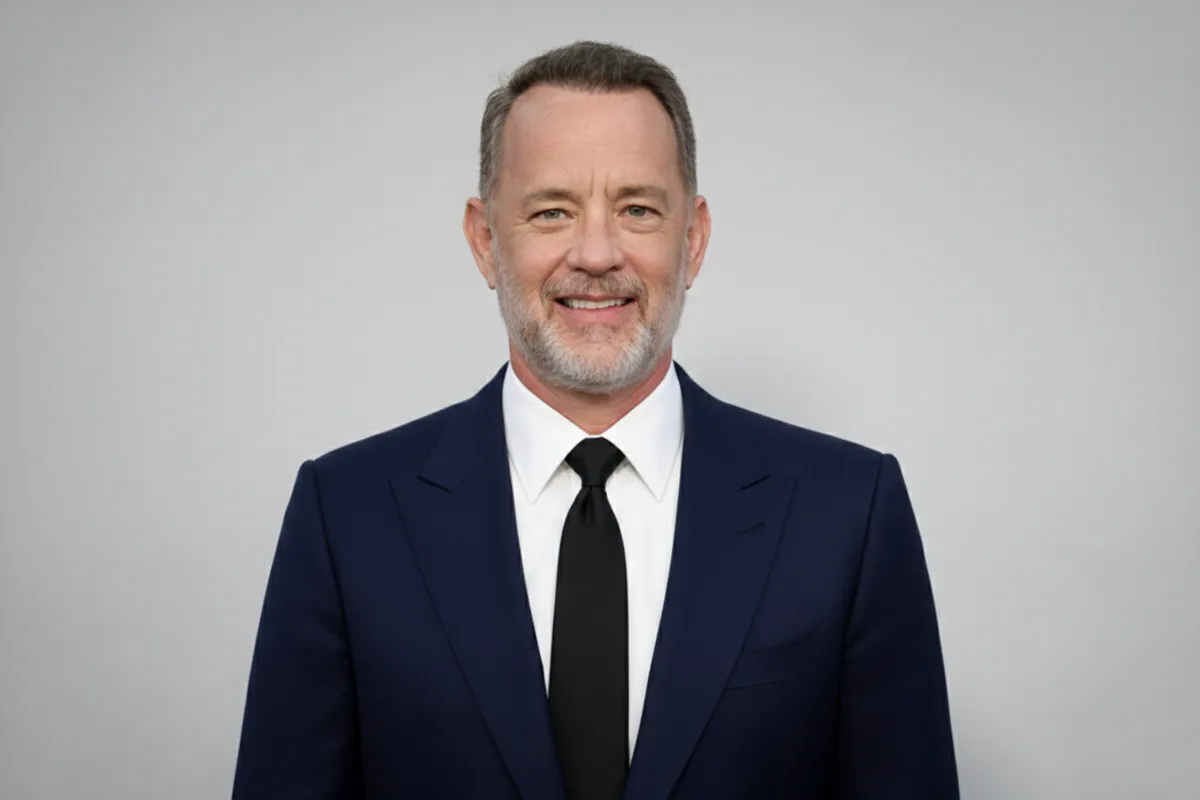
Tom Hanks is an American actor and producer whose career is widely associated with character-driven storytelling and historically grounded narratives rather than spectacle or stylistic experimentation. Since the early 1980s, he has worked across comedy, drama, animation, war films, and biographical cinema, becoming known for performances that emphasize emotional clarity, restraint, and credibility, as well as for a long-standing interest in projects that reflect cultural memory and institutional life.
Quick Facts
| Field | Details |
|---|---|
| Full Name | Thomas Jeffrey Hanks |
| Date of Birth | July 9, 1956 |
| Age | 69 years (as of 2026) |
| Place of Birth | Concord, California, USA |
| Nationality | American |
| Ethnicity | English, German ancestry |
| Profession | Actor, filmmaker, producer, writer |
| Years Active | 1980–present |
| Production Company | Playtone |
Early Life and Background
Tom Hanks was born in Concord, California, and experienced a childhood shaped by geographic mobility following his parents’ divorce. Raised primarily by his father, Amos Mefford Hanks, a working-class cook, Hanks moved frequently throughout Northern California. This upbringing fostered independence, adaptability, and close familiarity with everyday institutional environments.
These formative experiences later informed his capacity to embody characters rooted in collective responsibility, civic duty, and moral endurance rather than individual exceptionalism.
Family
Parents
| Parent | Details |
|---|---|
| Father | Amos Mefford Hanks, cook |
| Mother | Janet Marylyn Frager, hospital worker |
Siblings
| Sibling | Details |
|---|---|
| Jim Hanks | Younger brother |
| Sandra Hanks | Sister |
Education
| Category | Details |
|---|---|
| College | Chabot College |
| University | California State University, Sacramento |
| Field of Study | Theatre and acting (non-degree) |
| Film School | Did not attend |
| Practical Training | Repertory theatre and regional stage productions |
Career Development
Career Beginnings
| Film / Series | Year | Notes |
|---|---|---|
| Bosom Buddies | 1980–1982 | Television debut |
| Splash | 1984 | Mainstream film breakthrough |
| Big | 1988 | First Academy Award nomination |
Transition to Auteur-Driven and Prestige Cinema
| Phase | Key Works |
|---|---|
| Social Realism | Philadelphia, Forrest Gump |
| Historical Epic | Saving Private Ryan, Apollo 13 |
| Isolation Narrative | Cast Away |
| Institutional Drama | Bridge of Spies, The Post |
In the late 2010s and early 2020s, Tom Hanks’ career entered a phase defined less by event-driven releases and more by continuity of narrative purpose across changing exhibition models. Films such as Greyhound and Finch reaffirmed his longstanding association with historically grounded, ethically centered storytelling, even as the global film industry underwent structural shifts in distribution and audience access.
Rather than signaling a strategic reinvention, Hanks’ involvement in platform-supported productions reflected the portability of his established screen identity across formats. His presence functioned as a guarantor of classical studio-era values character integrity, institutional perspective, and moral clarity within contemporary digital release environments, demonstrating how traditional cinematic authority can persist independent of theatrical scale.
Hanks’ collaboration with Leonardo DiCaprio in Catch Me If You Can (2002), directed by Steven Spielberg, illustrates his role as an institutional counterweight to younger star personas, reinforcing narrative authority and moral grounding within intergenerational cinema.
Contemporary & Late-Career Phase
| Phase | Representative Works |
|---|---|
| Prestige Streaming Transition | Greyhound, Finch |
| Literary Adaptation | A Man Called Otto |
| Digital-Era Auteur Cinema | Here, Pinocchio |
Hanks’ career is frequently discussed alongside contemporaries such as Denzel Washington and Meryl Streep, figures similarly associated with long-term audience trust. Hanks differs in his emphasis on restraint and transparency, functioning less as a performer of intensity and more as a cinematic anchor of ethical continuity.
Producer-Led Artistic Stewardship (Playtone)
| Project | Format |
|---|---|
| Band of Brothers | Miniseries |
| The Pacific | Miniseries |
| John Adams | Miniseries |
| Greyhound | Feature Film |
| Masters of the Air | Miniseries |
Awards and Honors
| Award | Details |
|---|---|
| Academy Awards | 2 wins (Best Actor) |
| Golden Globe Awards | Multiple wins |
| AFI Life Achievement Award | 2002 |
| Kennedy Center Honors | 2014 |
Relationship Status and Personal Life
| Category | Details |
|---|---|
| Marital Status | Married |
| Children | Four |
| Partner | Profession | Period |
|---|---|---|
| Rita Wilson | Actress, producer, singer | 1988–present |
| Child | Notes |
|---|---|
| Colin Hanks | Actor and filmmaker |
| Elizabeth Ann Hanks | Writer and producer |
| Chet Hanks | Actor and musician |
| Truman Theodore Hanks | Actor and cinematographer |
Public Presence and Social Media
| Platform | Handle / Status |
|---|---|
| @tomhanks (Verified) | |
| X (Twitter) | @tomhanks (Verified) |
| Tom Hanks (Official page) |
Physical Measurements
| Measurement | Details |
|---|---|
| Height | Approximately 6 ft (1.83 m) |
| Eye Color | Brown |
| Hair Color | Dark brown (graying) |
Net Worth and Earnings
| Field | Details |
|---|---|
| Net Worth | Estimated USD 400 million |
| Actor Fee | USD 15–25 million per film (peak) |
| Backend Participation | Extensive profit-sharing |
| Producer Revenue | Playtone film and television profits |
Trivia / Lesser Known Facts
- Frequently consulted as an advisor on historical accuracy
- Avoids franchise dependency outside animation
- Repeatedly portrays institutional authority figures
- Integrates producer oversight into performance choices
FAQs
Q: What distinguishes Tom Hanks’ career?
A: His sustained embodiment of moral authority and institutional trust.
Q: Does he prioritize producing?
A: Yes. Producing is central to his long-term legacy.
Q: What defines his performance style?
A: Emotional transparency, restraint, and ethical clarity.
Assessment and Long-Term Significance
Tom Hanks’ career represents the transformation of the modern Hollywood star into a cultural and institutional steward. Through sustained collaboration, ethical narrative commitment, and producer-driven historical storytelling, he has reshaped the relationship between celebrity, authorship, and public trust.
Source Disclaimer
This profile is compiled from publicly available, reputable institutional and journalistic sources, including official film industry records, academic film studies references, production company documentation, and major international media reporting. Sources consulted include, but are not limited to:
- Academy of Motion Picture Arts and Sciences awards archives
- British Film Institute (BFI) filmography and archival records
- American Film Institute (AFI) institutional publications
- Playtone official production documentation
- Major international media organizations (The New York Times, The Guardian, Variety, Associated Press)
- Open-knowledge reference repositories including Wikipedia and Wikimedia Commons
While certain biographical and financial details may vary across publications, the information presented reflects prevailing scholarly and journalistic consensus at the time of writing and is subject to periodic editorial review.